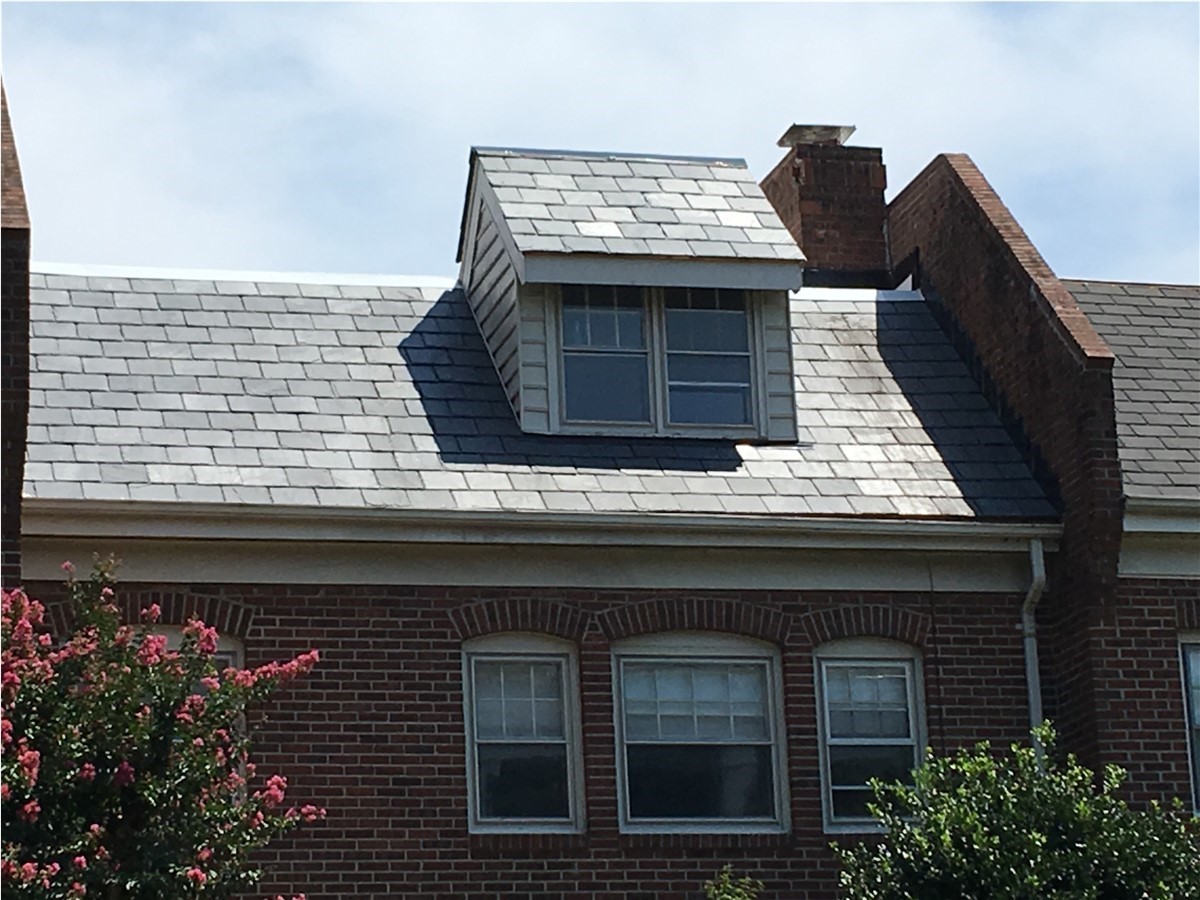
This classic 1950s property in Newport News, Virginia, is a reminder of just how durable natural stone can be. Natural slate is built to withstand coastal winds and sea air for well over a century, giving local occupants generations of reliable shelter. However, in this feature of Roofing for Reel, we uncovered a textbook example of what happens when a quick-fix repair goes sideways.
The Problem
While examining a section near the roof valley, Brian noticed a major repair failure: someone had attempted to secure a slipping slate by screwing a rigid metal strap right across its face and smearing white sealant over the top. Instead of holding the stone in place, the slate had slipped right out from underneath the strap. This left an opening for coastal rain to reach the roof decking—the solid wooden base under your tiles—putting the property's interior at risk during the next heavy storm.
The Technical Why
Slate tiles act like a protective coat of armor, overlapping each other to shed water straight into your gutters. Here is why that rigid strap fix completely backfired:
Slippery Surface Failure: Smooth slate expands and contracts during hot Tidewater summers and frosty winters. A flat metal strap clamped over the surface gives the stone no real grip, allowing it to slide down the slope anyway.
Damaging Surface Seals: Caulk and white roof sealants break down fast under intense sun and salt air. Once the sealant cracks, water gets trapped directly against the stone and underlying wood decking.
Missing Specialized Technique: Proper slate maintenance relies on hidden fasteners—like copper slate hooks or slate rippers—installed under the upper overlapping tiles rather than clamping hardware over the top face.
Professional Advice
Since slate roofs sit high above the ground, we never recommend property owners climb up to check tiles themselves. Instead, you can safeguard your property by asking a contractor these key questions before any repair work begins:
"Will you be using surface caulk or metal straps?" If a contractor mentions screwing metal straps across the face of your tiles or coating them in roof cement, stop right there.
"How do you secure replacement slates?" Qualified slate roofers use specialized slate hooks or hidden roofing nails tucked neatly under the course above.
"Do you specialize in historical slate maintenance?" Slate requires specific hand tools and techniques that standard shingle installers rarely carry.
Whenever you're ready to take a closer look at your historic roof, our local crew is here to help keep your property dry and your mind at ease. Give us a shout at 757-867-6600 or fill out the form on this page. We are always happy to stop by and give you an honest look!
Tags
Subscribe to The Roofing Company's Blog





Comments